

Vessel tracking is often reduced to a simple visual: a ship moving across a map. That is useful, but it is not where the real value sits. In practice, the value comes from what a team can decide once that movement is visible, interpretable, and connected to the operational picture around it.
In shipping, timing is never just timing. A delay affects berth planning, inland logistics, customer communication, chartering decisions, and internal confidence in the plan. Better tracking does more than show position. It helps teams judge whether a voyage is unfolding as expected, where pressure is building, and when intervention is needed.
The strongest vessel-tracking platforms are built around that reality. They combine AIS data with filtering, alerts, port and anchorage visibility, area monitoring, and journey replay so users can move quickly from observation to understanding. Done well, vessel tracking becomes an operational discipline, not just a screen.
Vessel tracking has moved on
At its core, vessel tracking means following a ship’s location, speed, course, and voyage progress through AIS and related maritime data. For years, that alone represented a major step forward. It gave operators better awareness across fleets, gave charterers and cargo interests a clearer view of movement, and made it easier to monitor voyages in real time.
But the market has matured. Most teams no longer need another map with moving dots. They need a clearer operational picture at vessel, fleet, port, and voyage level. They need to understand whether a vessel is behaving as expected, whether a destination call is tightening up, and whether a developing issue should trigger action now rather than explanation later.
That is where the BigOceanData vessel-tracking proposition feels credible rather than cosmetic: real-time tracking designed for operational decisions, supported by terrestrial and satellite AIS, advanced filtering, and alerts across fleet, port, and voyage activity. The value has shifted from seeing movement to using movement.
A live position is only the starting point
A live position gives immediate awareness. It shows that a vessel has sailed, slowed, arrived, anchored, or entered a monitored area. That baseline visibility is essential because it removes guesswork and gives different teams a common reference point.
What it does not do on its own is explain significance. A vessel can appear close to port and still face a delay if anchorage pressure is building. A vessel can stay on a familiar route and still create concern if speed, timing, or behaviour begins to drift from expectation. Teams need context: Is the voyage still on track? Is congestion likely to erode the ETA? Is this routine variation or the start of a problem?
This is where alerts, area monitoring, and manage-by-exception workflows start to matter. They reduce the need to watch every voyage continuously and instead surface the activity that deserves attention. That is a far better use of operational time than asking teams to monitor dozens of vessels manually and hope nothing important is missed.
Where better tracking changes decisions
ETA management is one of the clearest examples. Arrival expectations influence berth planning, resources ashore, inland coordination, customer messaging, and commercial credibility. Teams need to see voyage progress as it develops and understand whether a changing ETA is noise, temporary inefficiency, or an early signal of wider disruption.
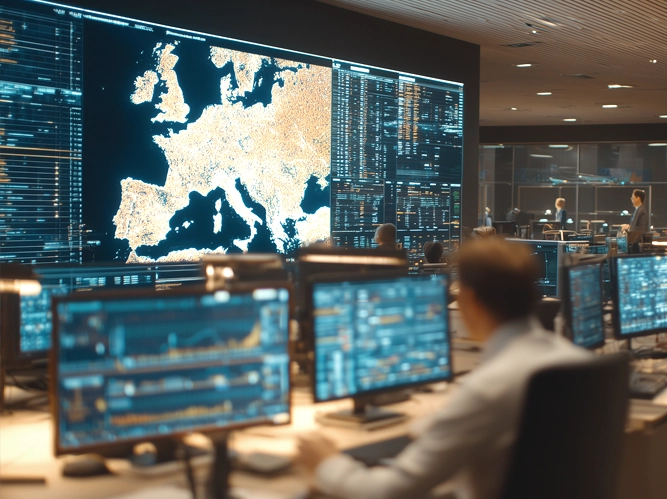
The same applies to fleet visibility. Most organisations are not tracking one vessel in isolation. They are managing activity across regions, ports, and voyage stages, often with several teams working from the same information. Strong tracking gives those teams a shared view with the right level of filtering, alerting, and drill-down so decisions stay aligned rather than fragmented.
Port and anchorage visibility also make a meaningful difference. Looking at a vessel in isolation can give a false sense of certainty. Looking at that vessel in the context of destination port activity, nearby traffic, and waiting areas immediately improves judgment. It becomes easier to explain delay risk, sequence likely next steps, and set expectations with more confidence.
Journey replay: understanding what actually happened
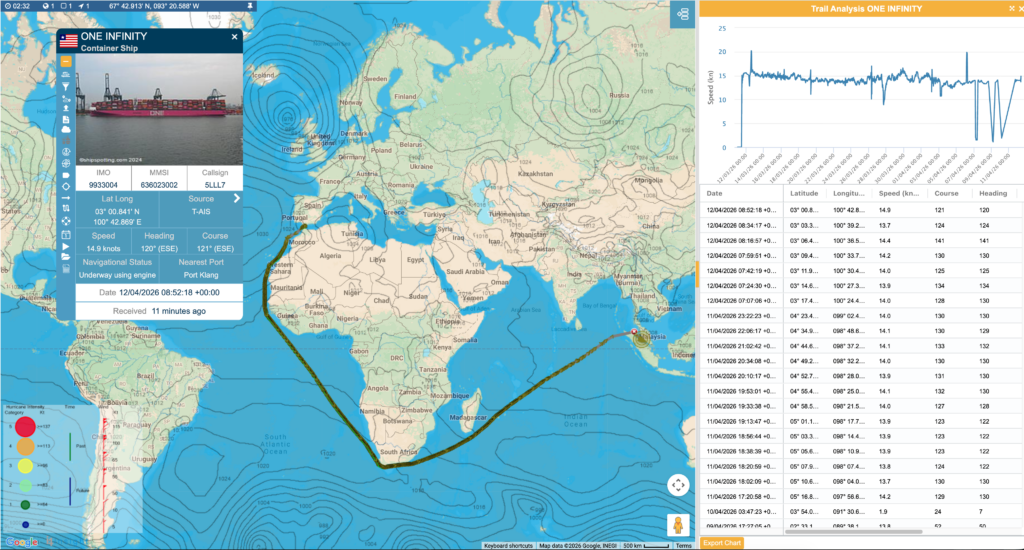
When licensing constraints limit how historical data can be presented externally, journey replay is the right way to talk about value. It is more practical, more intuitive, and closer to how maritime teams actually review a voyage. Instead of presenting raw historical datasets, journey replay allows a user to step back through a completed movement and understand how events unfolded.
That matters because post-voyage understanding is rarely about a spreadsheet of positions. It is about sequence. When did the vessel begin to slow? Where did the route start to diverge from expectation? How long was spent waiting off port limits? What was happening around the vessel at that point? Replay answers those questions in a way that is useful to operators, analysts, and managers alike.
It also bridges the gap between live monitoring and continuous improvement. A team can investigate an incident, revisit a port approach, review behaviour within a monitored area, or look back at the build-up to a delay without exposing licensed underlying datasets. In product terms, replay turns movement into understanding, and understanding into better future decisions.
From AIS signals to operational intelligence
AIS remains the foundation of vessel tracking because it provides the movement signals on which everything else is built. But raw signals only become useful when they are organised, filtered, and interpreted in context. That is where vessel tracking starts to overlap with maritime intelligence.
This shift is visible across the maritime technology market, including platforms such as BigOceanData, where the emphasis is increasingly on turning vessel movements into operational insight rather than simple position display. When AIS is combined with other positional data sources, alerting, port visibility, monitored areas, fleet views, and behavioural analytics, the result is far more decision-ready.
Where the commercial value shows up
Vessel tracking is often discussed through an operational lens, but its commercial value is just as important. Better visibility supports clearer customer communication, stronger planning conversations, and more confidence in execution. It helps teams explain delay risk earlier, set more realistic expectations, and avoid the credibility loss that comes from being surprised by events that should have been visible.
Confidence is commercially valuable. A team that can speak with conviction about voyage progress, congestion exposure, or likely arrival windows is in a stronger position than one working from fragmented updates. Better tracking improves not only awareness but also the quality of decisions around scheduling, commitments, and response.
What good vessel tracking should actually deliver
For users evaluating vessel tracking today, coverage is only the entry point. The more important question is whether a platform helps people work faster and think more clearly. That means reliable AIS data, strong filtering, useful alerts, voyage and fleet-level monitoring, port and anchorage visibility, area monitoring, journey replay, and an interface that supports manage-by-exception rather than constant manual checking.
The most useful products are designed to help teams interpret movement in context and act earlier. That is the real test: not whether a platform can show where a vessel is, but whether it helps a team understand what that movement means.
From visibility to operational confidence
Vessel tracking matters because shipping decisions are interconnected, time-sensitive, and vulnerable to small changes in movement. The industry is moving beyond map-watching. The better question now is not whether a platform can display a vessel, but whether it can turn movement into operational confidence. The real value of vessel tracking lies not only in seeing where a vessel is, but in understanding what that movement means for your operations.
Contact the BigOceanData team to explore how journey replay, alerts, port and anchorage visibility, and vessel tracking capabilities can support better decision-making for your fleet.